Sea shell proteins in cocaine vaccine The animal kingdom is lego bricks for modern medicine
Researchers have been working on a vaccine to provoke an immune reaction to cocaine for decades. The hope is that such a treatment would help drug users overcome their addiction, as their immune system would destroy the molecules before they can interfere with the brain.
However, contrary to vaccines directed against large pathogen proteins (like the COVID vaccine), cocaine is a small molecule made up of only 43 atoms. The molecule is small enough that it is not recognized as a foreign body by the immune system and can travel in the blood through the blood-brain barrier, binding to synaptic receptors of neurons.
To train the immune system to react to the small molecule, the plan is to attach a chemical with a shape similar to cocaine (as cocaine eventually degrades by reacting with water) to a carrier protein large enough to trigger the antibody response of the immune system.
Antibodies work by taking a fingerprint of the surface of the foreign molecule so they can recognize it later and escalate an immune response more quickly. In our case, the body would create many antibodies memorizing fingerprints of the carrier molecule (which takes up most of the volume) and some fingerprints from the cocaine-shaped small molecule. This last category of antibodies would then be able to recognize cocaine when it is injected alone.
On top of the challenge of making the fingerprint from the cocaine-shaped molecule stick to a carrier that generalizes to react to pure cocaine, researchers need to ensure that the many carrier-shaped antibodies will not trigger against proteins naturally present in the body. Otherwise, this could lead to the development of autoimmune diseases, where the immune system attacks its own cells.
To address these challenges, a line of research initiated in the 2000s used a carrier called KLH (Keyhole Limpet Hemocyanin). It is a protein extracted from the giant keyhole limpet, a peaceful aquatic snail living along the coast of western North America.
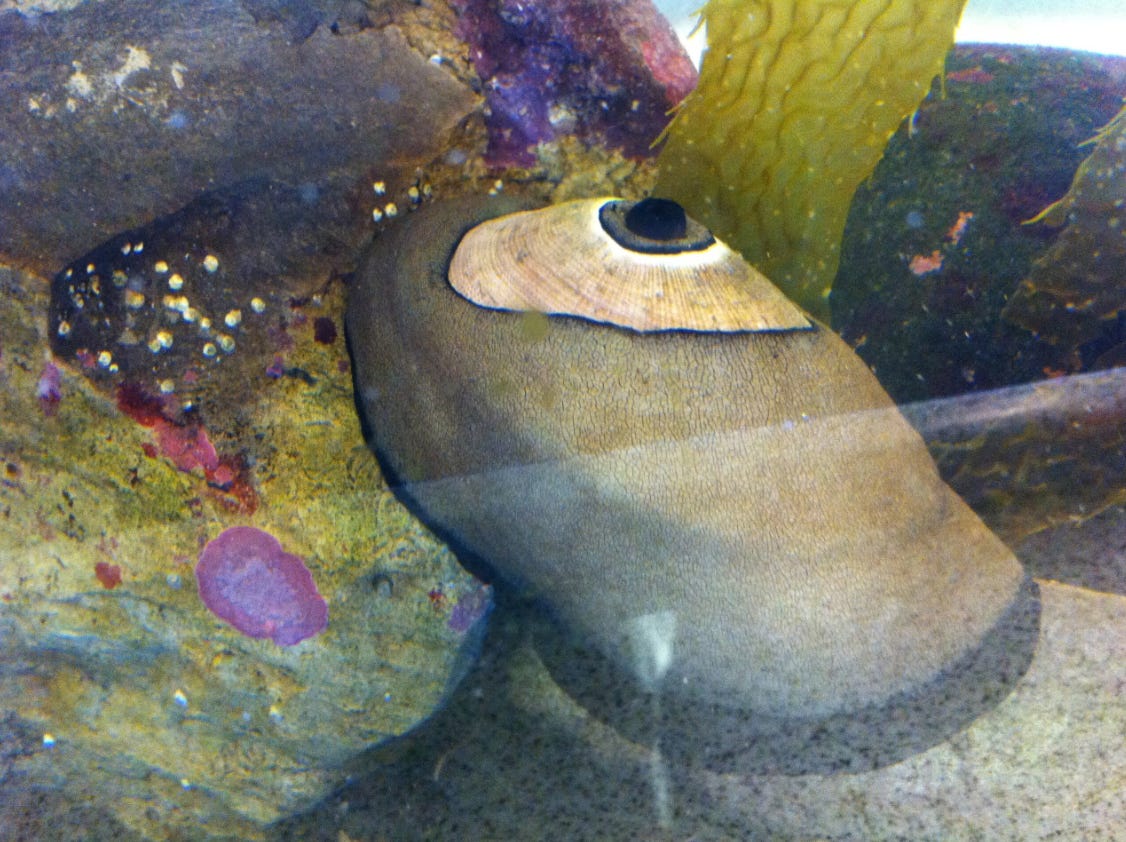

The protein combines many desirable characteristics. First, it is large enough to create a strong immune reaction. Second, it has many spots to attach small molecules, maximizing the carrier/target surface ratio. Third, it comes from an organism that is phylogenetically distant from humans, making it unlikely that its shape will resemble human proteins.
From what I understand from the clinical trial, the vaccine can successfully create an immune reaction in rats, and can even reduce self-administration of cocaine in rats that have been trained to be drug users.
Alas, this cute sea creature doesn’t hold the secret to solving drug addiction yet. KLH-based vaccines remain confined to academic papers and have not been applied in human studies.
However, other types of cocaine vaccines (using bacterial protein carriers) have been tested on humans. They created an immune reaction in 40% of the subjects, who reported that the cocaine was perceived as being of “lower quality.”
The story behind the story.
I found this story late at night after discovering the existence of a cocaine vaccine. I was obsessed with understanding how one could hope to make people immune to drugs. I pieced together the mechanisms, following citation chains from scientific papers and Wikipedia pages, until I came across a picture of the giant keyhole limpet.
As I stared at this animal, the whole story sounded so absurd. We are harvesting the blood from this mollusk to build artificial molecules to manipulate the human immune system so it would destroy chemicals from the coca plant to which humans are addicted.
It keeps living in my mind as this dual symbol of scientific achievement and the death of wonder for the natural world. In medical research, animals stop existing as beings; they are reservoirs of chemical building blocks.
Want to hear when I post something new?